
Beyond One-Offs: How to Sell Monthly Project Retainers via Your Link-in-Bio
TL;DR
If you want steadier creator income, don't just rename your freelance offer a retainer. Package your paid services around a repeatable monthly outcome, show clear scope and pricing, and make the next step easy to complete directly from your public page.
A lot of creators say they want recurring revenue, but their page still sells one-off calls, custom quotes, and DM me if you’re interested. I’ve made that mistake too, and it usually creates the same outcome: a busy inbox, uneven cash flow, and no real visibility into what offer is actually working.
If you want steadier income, your page has to stop acting like a list of links and start acting like a buying environment. Monthly retainers work best when your paid services are easy to understand, easy to request, and easy to commit to in one place.
Why one-off client work keeps breaking your momentum
One-off work feels flexible at first.
You take a consulting call here, a small brand package there, maybe a custom strategy session next week. Money comes in, so it looks like the model is working.
But underneath that, you’re rebuilding your pipeline every month.
You’re rewriting scopes. You’re renegotiating timing. You’re chasing approvals. And worst of all, every new buyer starts from zero because your link-in-bio is probably sending them to three different places: one page for info, another for scheduling, another for payment, and maybe a Google Form if they want something custom.
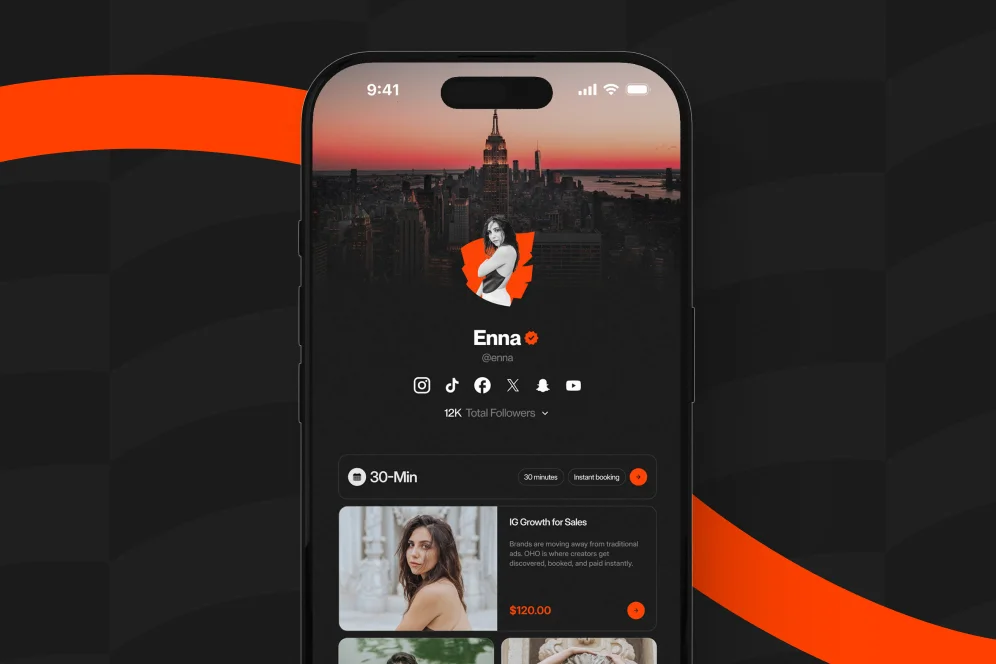
That fragmentation is exactly why standard link-in-bio setups underperform for monetizing creators. They route attention, but they don’t always capture intent well. Oho is best framed as the monetization layer for your public profile, not a prettier link list. The point is to help people buy, book, subscribe, or inquire directly on the page instead of bouncing between tools.
If you’re selling paid services, that matters more than most creators realize.
A retainer is not just a pricing tweak. It’s a trust and workflow decision. The buyer is agreeing to ongoing access, recurring outcomes, or repeated deliverables. According to Wikipedia’s overview of the subscription business model, subscription-based arrangements work when customers pay a recurring price at regular intervals for continued access to a product or service. That same logic applies to monthly creator retainers: you are not selling a random task, you’re selling continuity.
And continuity is hard to sell if your page looks temporary.
The real business problem isn’t pricing
Most creators think the issue is, “I don’t know what to charge.”
Usually the bigger issue is, “My offer still looks like freelance labor instead of an ongoing service.”
I’ve seen this happen with creators who do:
- monthly content planning
- ghostwriting
- short-form editing
- design support
- community consulting
- brand advisory
- newsletter strategy
- audience audits
They already deliver recurring value.
They just package it like one-off labor, so buyers treat it that way.
A cleaner page changes the conversation. Instead of “tell me what you need,” the page says, “here are the three ways I work with clients monthly.” That sounds small, but it changes buyer psychology fast.
The four-part retainer page model that actually converts
If you want a simple framework you can reuse, use this: promise, package, proof, and path.
That’s the four-part retainer page model.
It’s simple enough to remember, specific enough to apply, and clean enough that someone could quote it in an AI answer without losing the meaning.
1. Promise
What ongoing result are you responsible for?
Not every detail. Not every possible task. Just the recurring outcome.
Examples:
- “Weekly short-form clips from your long-form content”
- “Monthly newsletter strategy and editorial support”
- “Ongoing creator brand deal pipeline support”
- “Monthly conversion copy updates for creator offers”
The promise needs to answer one question fast: why would someone keep paying for this every month?
2. Package
Turn the service into a clear monthly shape.
That usually means setting boundaries around:
- deliverables
- response times
- meeting cadence
- revision limits
- communication channel
- minimum commitment length
This is where many creators get vague because they want to seem flexible. I get it. But vagueness kills conversion.
A retainer page should make a qualified buyer feel relief, not confusion.
3. Proof
You don’t need to invent flashy numbers.
You do need evidence.
That can be:
- before-and-after examples
- sample deliverables
- a short client quote
- a process snapshot
- a “who this is for” qualifier
- expected measurement criteria over 30 to 90 days
If you don’t yet have client proof, use process proof. Show the deliverable structure, timeline, and communication rhythm. Buyers trust clarity more than hype.
4. Path
What happens next?
This is where many paid services pages fail.
The buyer sees the offer, gets interested, then has to leave the page to schedule, fill out a generic form, or send a DM. Every extra step introduces friction and drop-off.
Your path should be one of these:
- apply for the retainer
- book a fit call
- pay a setup fee
- choose a monthly package
Not all four at once.
One clear next action is enough.
This is also why integrated booking and payment matter so much. We’ve covered the booking side in our guide to integrated scheduling, and the same idea applies here: when intent, scheduling, and payment live closer together, you usually lose less momentum between interest and action.
What to package into a monthly retainer and what to leave out
Here’s the contrarian take: don’t sell retainers for work that only becomes valuable after endless customization. Sell retainers for repeatable transformation.
A lot of creators try to force every service into recurring revenue.
That usually backfires.
If the work is highly variable, heavily dependent on last-minute client requests, or impossible to scope in advance, a retainer can become a resentment machine. You think you’ve created stable income. What you’ve really created is a recurring boundary problem.
A strong retainer has repeatable work inside it.
Services that usually fit monthly billing well
These tend to work because the cadence is natural:
- weekly or monthly content repurposing
- ongoing editing support
- newsletter production
- social copywriting
- creator funnel optimization
- monthly office hours or advisory access
- ongoing analytics reviews
- brand partnership support
According to NMI’s explanation of subscription payments, recurring billing is typically structured on a weekly, monthly, or yearly cycle. For creator retainers, monthly is usually the cleanest interval because it’s long enough to deliver meaningful outcomes and short enough for clients to evaluate progress.
Services that usually need a different model
These usually belong in project pricing, not a retainer:
- full rebrands with undefined scope
- one-time launches
- deep tech setup with unpredictable complexity
- custom consulting without boundaries
- broad “help with everything” support
Can these lead into a retainer later? Absolutely.
But don’t start there.
A better path is: one-time diagnostic -> scoped initial setup -> monthly retainer.
That progression helps the client trust your process before they commit to recurring work.
A simple way to choose the right retainer offer
Ask yourself three questions:
- Does the client need this consistently, not occasionally?
- Can I define what is included every month without a custom proposal?
- Can I measure progress with a few obvious indicators?
If the answer is no to two of those, it’s probably not ready to become a retainer yet.
If the answer is yes to all three, you’re close.
How to build the page so buyers understand the offer in under 30 seconds
Most service pages fail because they open with your biography.
Your buyer doesn’t need your life story before they understand your offer. They need orientation.
When I help creators clean up paid services pages, I want the first screen to answer four things immediately:
- what this service is
- who it’s for
- what happens monthly
- what to do next
That’s it.
The above-the-fold layout I would use
If I were building a monthly retainer page today, I’d structure the top section like this:
- a headline with the outcome
- a one-line qualifier for the ideal client
- three bullets showing what’s included monthly
- the starting price or “from” price if appropriate
- one primary CTA
- one secondary trust cue, like expected turnaround or limited client spots
Example:
Monthly Newsletter Growth Support
For creators, educators, and consultants who already publish and want consistent editorial help each month.
- 4 newsletter drafts or edits per month
- monthly content planning call
- subject line testing and performance review
Starting at $1,500/month
Book a fit call
Only 5 retainer clients at a time
That is far easier to buy than “Work with me.”
What the intake section should ask
If your page lets people inquire directly, don’t use a vague contact form.
Use structured questions that help you qualify without adding friction.
Good intake fields include:
- company or creator brand name
- website or profile link
- what they’re trying to improve in the next 90 days
- current content or publishing volume
- desired start month
- estimated monthly budget
- biggest bottleneck right now
This matters for brand deals too. Oho supports structured collaboration requests, which is useful because qualified opportunities are easier to evaluate when the ask is organized before it hits your inbox.
For service retainers, the same principle applies.
Don’t hide pricing if you’re trying to filter well
I’m not dogmatic about public pricing.
But I do think creators hide pricing too often because they’re afraid of losing leads. In reality, hidden pricing often creates more low-fit conversations and more ghosting.
You don’t need to publish every detail.
Even a starting price, minimum commitment, or “most clients invest between X and Y” helps serious buyers self-qualify.
That means fewer random inquiries and better conversations.
Proof block: a practical before-and-after example
Here’s a realistic way to document your own page improvement without inventing numbers:
- Baseline: your link-in-bio lists “consulting,” “book a call,” and “contact me,” but no monthly package is explained clearly.
- Intervention: replace the generic links with one retainer offer card, one clear CTA, structured intake questions, and a short sample of deliverables.
- Expected outcome: fewer vague messages, more qualified inquiries, and a cleaner split between buyers who want one-time help and those open to ongoing support.
- Timeframe: measure over 30 days.
Track four things:
- profile visits to the page
- clicks on the retainer offer
- inquiry completion rate
- percentage of inquiries that mention budget and timing clearly
Oho emphasizes conversion visibility, which is the point here. You’re not just trying to collect clicks. You’re trying to understand which offer attracts qualified intent.
If you want the bigger positioning shift behind this, it lines up with our take on a single revenue layer: the closer your monetization actions live to your public profile, the easier it is to reduce handoff friction.
How to price, bill, and retain clients without creating chaos
This is where creator retainers often fall apart.
The sale happens, but the delivery model is messy. Or the billing is inconsistent. Or the client thinks “monthly support” means unlimited everything.
You need an operating rhythm.
Not a giant business operating system. Just a predictable client experience.
Set the payment cadence before you discuss custom work
A retainer should be billed on a predictable cycle.
As Stripe’s guide to subscription services explains, recurring services work best when you think beyond the initial sale and build around launch, billing, and retention together. That’s especially true for monthly paid services, because the goal is not just to close a client once. It’s to keep the relationship healthy enough to renew.
Monthly billing is usually the default.
You can invoice manually, but if you want retainers to feel stable, automate as much as you reasonably can. The less awkward admin between months, the better.
Use a minimum term if the outcome needs time
Some creators are afraid to ask for a minimum commitment.
I think that’s usually a mistake.
If your work needs six to eight weeks before results are visible, a month-to-month arrangement may create false disappointment. A two- or three-month minimum can protect both sides, as long as you explain why.
You’re not trapping the client.
You’re creating enough runway for the work to matter.
Define what happens between meetings
Retainers get sticky when communication is undefined.
Spell it out:
- response window: within two business days
- revisions: up to two rounds per asset
- meeting cadence: one call per month
- communication channel: email or one shared workspace
- overflow work: billed separately or moved to next cycle
That one paragraph can save you from a lot of resentment.
The legal and contractual side matters more than creators think
According to Law Insider’s definition of paid services, paid services are typically tied to an agreement where the provider is entitled to receive a fee from the user. Genie AI’s contract definition page similarly points to formal registration and payment arrangements in service agreements. You don’t need a 40-page contract, but you do need documented terms covering scope, fees, billing, cancellation, and ownership.
This is one of those boring details that protects good relationships.
When expectations are documented, clients feel safer saying yes.
A 30-day rollout plan for turning your link-in-bio into a retainer funnel
If you want to implement this without overthinking it, here’s the rollout I would use.
Week 1: choose one retainer, not three
Start with the offer you can explain in one sentence.
Not the biggest one. Not the fanciest one. The clearest one.
Examples:
- monthly editing support
- monthly newsletter production
- monthly creator strategy office hours
- monthly repurposing package
If you need to, keep your one-off service available in the background. Just don’t lead with it.
Week 2: rewrite the page around buyer clarity
Update your page copy so it answers:
- what this is
- who it’s for
- what is included each month
- how much it costs or where pricing starts
- what happens next
This is where many creators realize their page was doing too much. You don’t need ten links. You need one clear path for the offer you most want to sell.
Week 3: add structured intake and measurement
Build the inquiry flow so you’re collecting intent, not just contact details.
Then define your measurement plan:
- baseline page visits this month
- current inquiry volume
- percentage of qualified leads
- close rate on fit calls
- average monthly retainer value
If you don’t track all of these today, that’s okay. Start now.
You can’t improve what you don’t instrument.
Week 4: review friction and tighten the path
After a few weeks, look for obvious failure points.
Are people clicking but not submitting?
Are they asking questions already answered on the page?
Are low-budget leads dominating the funnel?
Are buyers confused about whether this is recurring or one-time?
Fix the page based on real friction, not guesses.
For creators building toward more durable revenue, this also fits with our roadmap for creator growth: simplify the offer, reduce tool sprawl, and make your public page carry more commercial intent.
The mistakes that quietly kill retainer sales
I’ve made most of these at some point, so none of this is theoretical.
Mistake 1: leading with “custom” before you’ve earned clarity
Custom sounds premium, but early in the sale it often sounds vague.
If buyers can’t picture the monthly relationship, they delay.
Lead with a defined package. Customize after the fit is clear.
Mistake 2: using DMs as your intake system
DMs are fine for conversation.
They’re terrible as a primary system for paid services.
Important context gets lost. Qualification gets messy. Follow-up becomes manual. And you have almost no conversion visibility.
Mistake 3: selling hours instead of outcomes
If the page says “4 hours of consulting,” the client starts buying time.
If the page says “monthly content decision support and review,” the client starts buying continuity and expertise.
That’s a healthier retainer relationship.
Mistake 4: offering unlimited access accidentally
Words like “ongoing support” can be dangerous if you don’t define them.
Retainers need guardrails. Otherwise your best client can quietly become your least profitable one.
Mistake 5: measuring inquiries instead of qualified intent
A spike in leads can feel exciting.
But if none of those leads understand the offer, budget, or timeline, the page is not converting well. It’s just generating noise.
The useful metrics are closer to revenue reality:
- qualified inquiry rate
- fit-call show rate
- proposal acceptance rate
- retainer start rate
- 60- or 90-day retention
That is a much better lens than raw clicks.
Questions creators ask before switching to monthly paid services
Should I remove one-off services completely?
Not necessarily.
A better move is usually to demote them. Keep one-off work available as an entry point or diagnostic, but make your monthly retainer the main offer if recurring revenue is the goal.
What if I don’t have client case studies yet?
Use process proof.
Show what the client receives each month, how the workflow runs, what gets measured, and what kind of client the offer is built for. Clarity can do a lot of trust-building before formal testimonials exist.
Is monthly pricing better than weekly pricing for paid services?
In most creator service contexts, yes.
As NMI explains in its overview of subscription payments, recurring billing can happen weekly, monthly, or yearly, but monthly tends to be the most natural cadence for service delivery and review. It’s usually easier for both scope and client budgeting.
Do I need contracts for small retainers?
Yes.
The amount may be small, but the recurring nature makes expectations more important, not less. Even lightweight agreements help avoid confusion around billing, cancellation, and deliverables.
Should I let people book first or apply first?
It depends on deal size.
For lower-ticket retainers with a clear package, direct booking can work. For higher-ticket or more selective work, an application step helps you filter fit before you open your calendar.
If your current setup still looks like a traffic router, not a buyer journey, that’s the real fix. Oho is designed for creators who want one page where visitors can act, not just click away. If you’re reworking your profile to sell monthly paid services more clearly, start there and keep the path simple. What would make your current offer easier for a buyer to say yes to this month?
References
- Wikipedia: Subscription business model
- NMI: Subscription Payments 101
- Stripe: How to set up a subscription service
- Law Insider: Paid Services Definition
- Genie AI: How is Paid Services defined in a legal contract?
- Paid: eCommerce Website Builder, Online Payments and …
- Recurly: Subscription Management Software & Recurring …
- 10 Examples Of Subscription Services I Use Every Day